Developer Tools / Case study
JarvisMCP
A governed gateway between AI agents and the systems they work in

In short
JarvisMCP is a governed AI tool gateway: one door between agents and company systems, with on-demand capability discovery, credentials kept out of the agents' reach, and a durable record of the work.
ResultIn daily production use as the single governed connection between our agents and our systems.
- Status
- In production
- State
- In production
- Role
- Operating layer for our agents
- Access
- Governed per key
- Credentials
- Never exposed to agents
- Built with
- TypeScript / Node.js / Model Context Protocol
Inside the project
01 / 01Project artwork, not a product screen: many capabilities routed through one governed gateway.
The brief
The problem
Connecting an agent to real systems usually means one integration per tool, one credential per integration, and no shared record of what the agent did. That breaks down quickly. Adding tools makes agents slower and less accurate, every new connection is another secret that can leak, and when an agent hands off mid-task, the only history is a chat transcript.
What we did
Our approach
We built a single gateway that sits between agents and everything they are allowed to touch. Agents discover capabilities on demand instead of loading all of them up front, and they compose several steps into one piece of work. Credentials stay on the trusted side of the gateway. Access is governed per key, and durable work items record who owns a task, where it stands and what evidence it produced.
Features
What it does
- 01
Find the right capability
A discovery layer lets an agent look up the tools relevant to a task. It keeps a broad integration surface navigable without putting every tool definition into every interaction.
- 02
Connect actions into a workflow
Code Mode lets an agent compose calls and use their returned data in the next step. The gateway brings those integrations behind a consistent execution interface.
- 03
Keep the work accountable
Governed access and durable coordination give ongoing work a place to record ownership, progress and evidence. An agent conversation can hand off its work without becoming the only record of what happened.
Results
What happened
- In production as the operating layer for our own agents, every day
- One governed connection instead of a separate integration per system
- Capabilities discovered on demand, so adding systems does not slow agents down
- Agents act through the gateway and never hold upstream credentials
- Work survives hand-offs: ownership, progress and evidence are recorded outside the conversation
Questions
About JarvisMCP
What problem does a tool gateway solve?
Without one, every agent needs its own integration and its own credentials for every system, and nothing records what it did. A gateway gives agents one governed connection, keeps the secrets on the trusted side, and makes the work auditable.
Can you build one for our systems?
Yes. The same pattern (governed access, on-demand discovery and a durable record of agent work) applies to any company that wants agents working inside its own tools.
Services
What this work shows we do
AI automation
Service pageModels wired into the tools your team already uses, with logs and limits.
System integration
Service pageYour CRM, billing and messaging tools exchanging data on their own.
Custom software
Service pageSoftware built around how the business works, and run after launch.
Related work
Built with the same services
 Business Systems
ButlerCRM
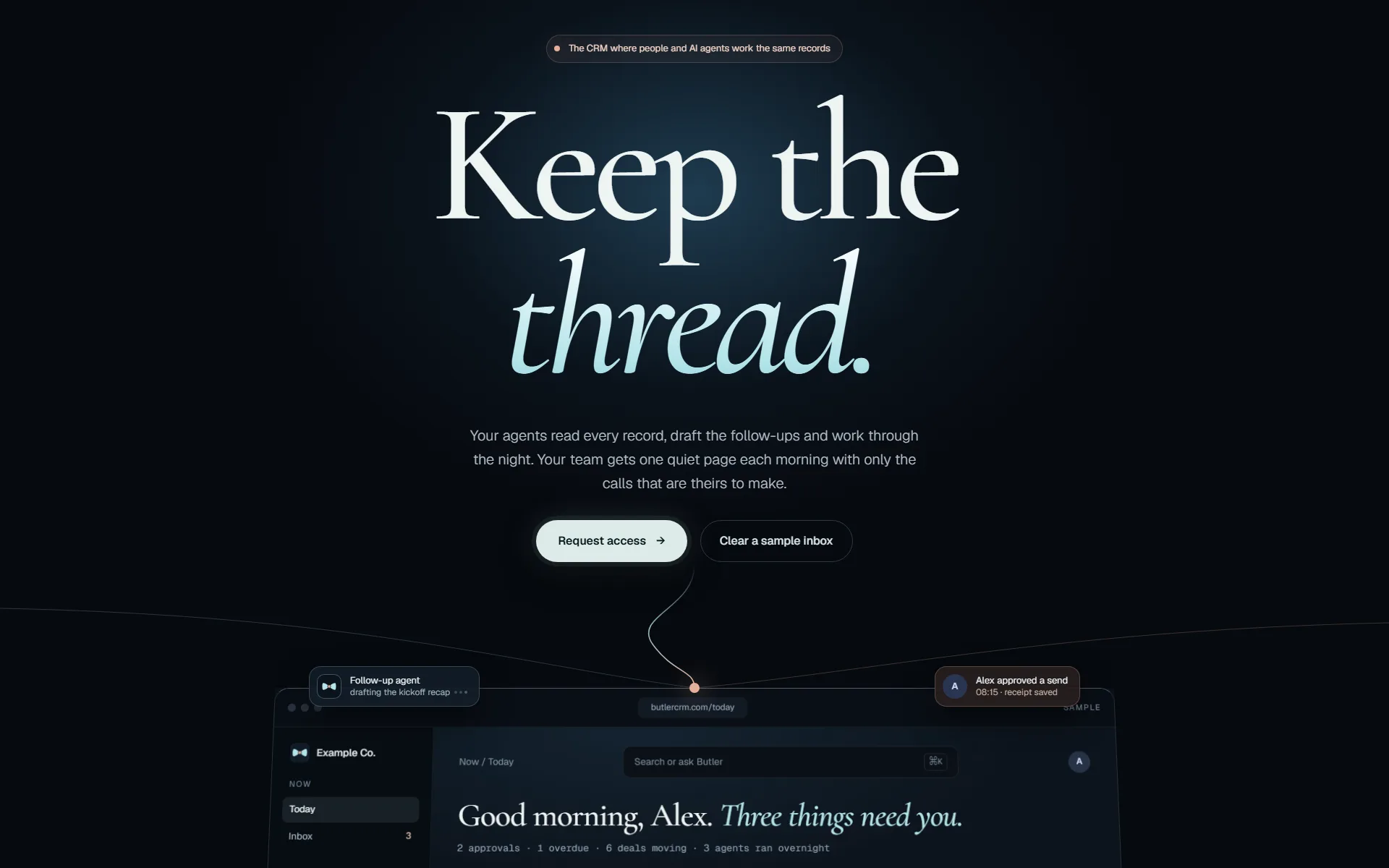
ButlerCRM keeps contacts, deals, email, calendar and tasks in one workspace that updates live for everyone in it. We rebuilt it on Elixir/Phoenix so changes appear for the whole team as they happen.
Read the case study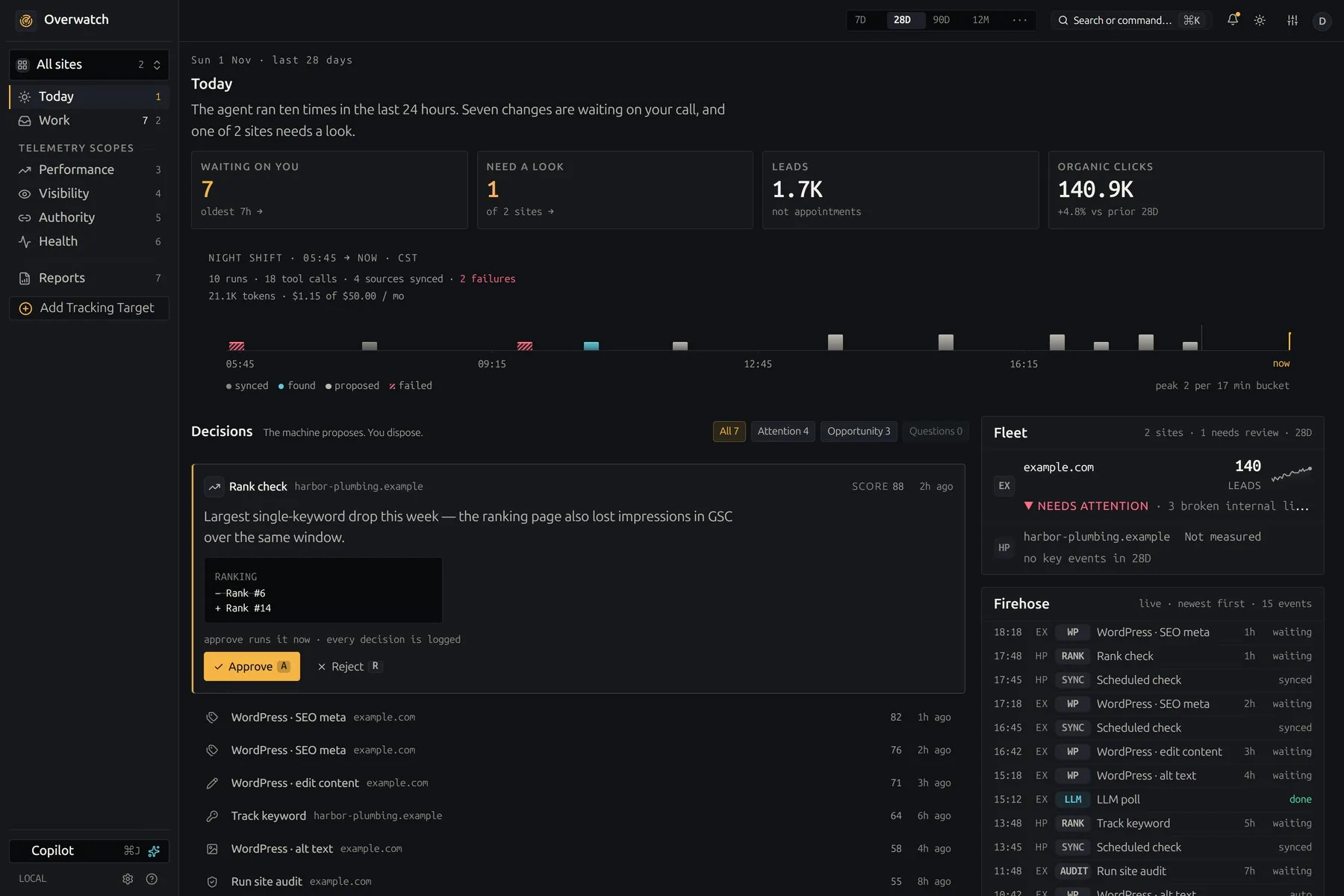 Sales & Marketing
Overwatch
Overwatch shows how a site is found in classic search, in AI answers and on the local map, then proposes the fixes. Nothing it proposes reaches a live site until a person approves it.
Read the case study
How we work
How a change reaches production
The same five gates for our own products and for yours. Nothing reaches your customers on the strength of a demo.
- 01 · Isolate
Its own branch and workspace
Every change starts in a separate copy of the code, so work in progress never touches what is live.
git worktree add .worktrees/your-change - 02 · Build
Engineers with AI agents
Agents write and test code beside us. They hold no passwords: every call they make goes through our gateway, which checks it and logs it.
agent → gateway → policy · audit · call - 03 · Prove
Evidence, then review
Tests, before-and-after screenshots of the running app, then independent reviewers. It does not move on until no serious finding is left.
review: 0 high · 0 medium → pass - 04 · Ship
Deployed and checked live
The pipeline builds and deploys. Then we check the running service itself, not just a green build.
replicas 1/1 · image sha matches · health 200 - 05 · Watch
Checked every night
Each integration we run is tested against its provider every night, so a changed API is caught before your team notices.
nightly: each integration vs its provider