In short
Kintunnel is a public WireGuard VPN manager for families and small teams, designed to be self-hosted with Docker Compose. It is a dry-run MVP; live VPS validation is pending.
- Visibility
- Public GitHub
- Focus
- Private networking
- Stack
- Docker and WireGuard
- Built with
- TypeScript / Docker / Docker Compose / WireGuard / Self-Hosted Infrastructure / Dokploy
Inside the project
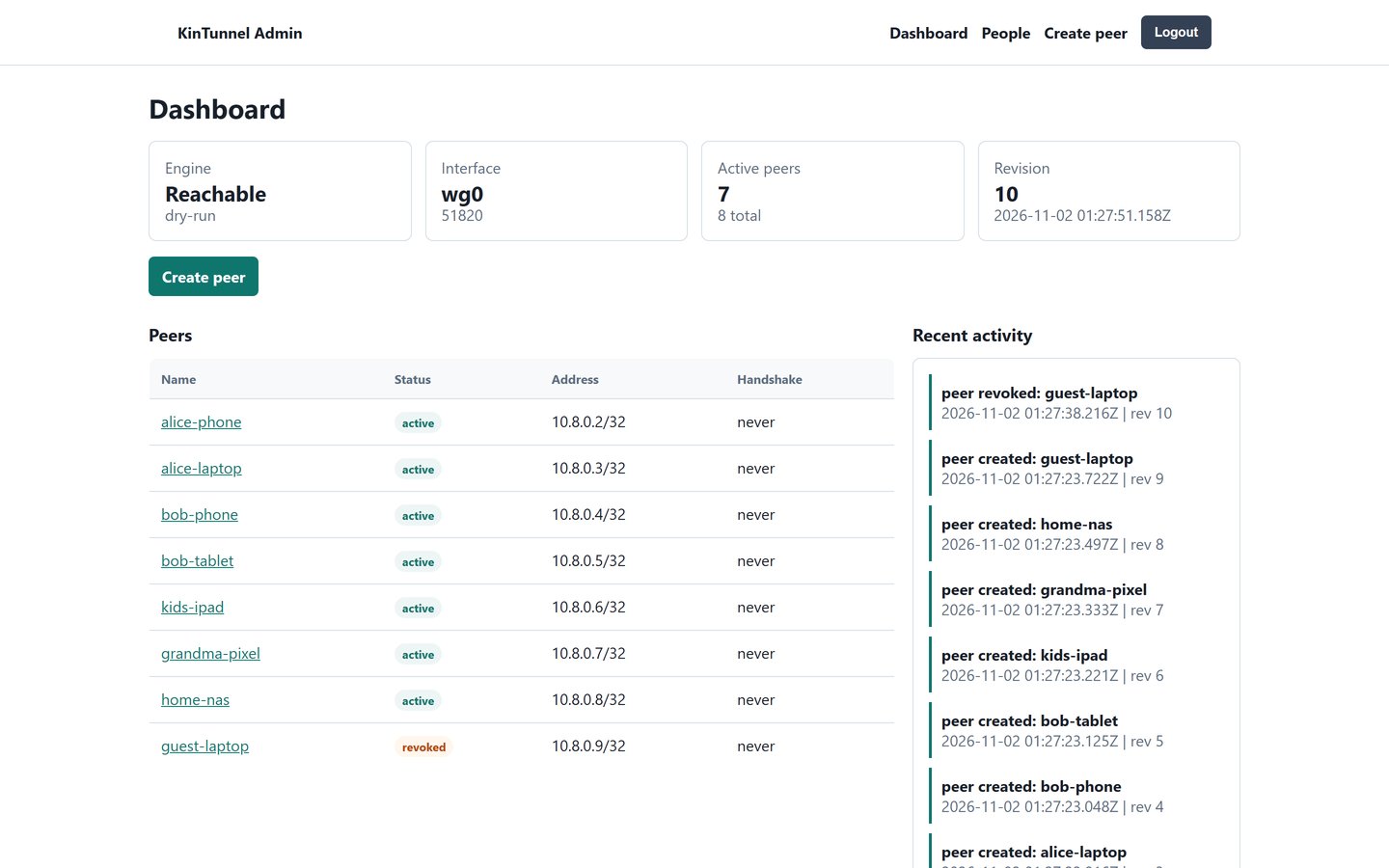
01 / 02Peers, engine health and recent activity in one view.
The brief
The problem
Small teams and families need secure private access without fragile manual VPN setup. The system has to stay understandable, portable, and deployable on self-hosted infrastructure.
What we did
Our approach
Built a management layer around WireGuard using Docker Compose and self-hosted deployment conventions, so peers, configs, and tunnels stay inside clear infrastructure boundaries.
Features
What it does
- 01
WireGuard network management
- 02
Docker-native deployment
- 03
Designed to be self-hosted with Docker Compose
- 04
Private access architecture
- 05
Portable infrastructure patterns
Results
What happened
- Public GitHub project
- WireGuard peers and configs managed through Docker
- Dry-run MVP; live VPS validation pending
- Configuration kept portable between hosts
Architecture
Under the hood
Portable VPN management pattern using Docker-hosted WireGuard and a controlled configuration workflow.
Portable VPN management pattern using Docker-hosted WireGuard and a controlled configuration workflow.
Services
What this work shows we do
Technology stack
Service pageHosting, deployment and monitoring we set up and run.
Related work
Built with the same services
 AI & Machine Learning
JarvisNano
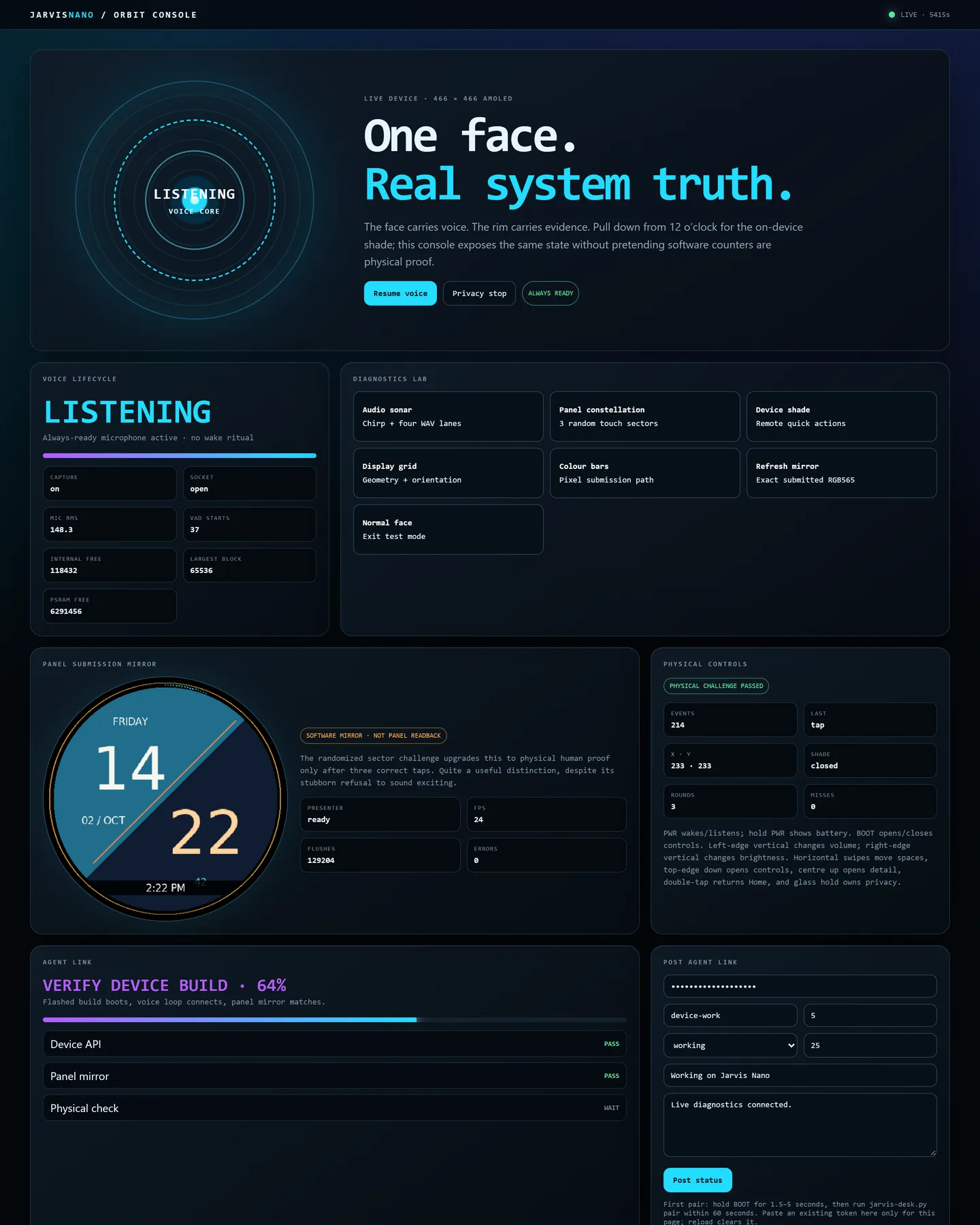
An open-source embedded AI project with C/C++ firmware on the Waveshare ESP32-S3 Touch AMOLED 1.75C and hardware-first prototyping to explore assistants that run on a device. A Kotlin Android app is the optional companion.
Read the case study
How we work
How a change reaches production
The same five gates for our own products and for yours. Nothing reaches your customers on the strength of a demo.
- 01 · Isolate
Its own branch and workspace
Every change starts in a separate copy of the code, so work in progress never touches what is live.
git worktree add .worktrees/your-change - 02 · Build
Engineers with AI agents
Agents write and test code beside us. They hold no passwords: every call they make goes through our gateway, which checks it and logs it.
agent → gateway → policy · audit · call - 03 · Prove
Evidence, then review
Tests, before-and-after screenshots of the running app, then independent reviewers. It does not move on until no serious finding is left.
review: 0 high · 0 medium → pass - 04 · Ship
Deployed and checked live
The pipeline builds and deploys. Then we check the running service itself, not just a green build.
replicas 1/1 · image sha matches · health 200 - 05 · Watch
Checked every night
Each integration we run is tested against its provider every night, so a changed API is caught before your team notices.
nightly: each integration vs its provider